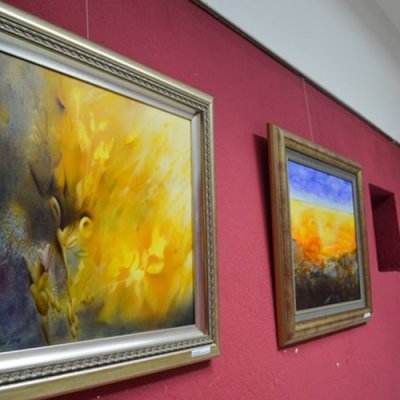
Light of the past

24. 07. 2015 – 05. 08. 2015


Within the “Ohrid Summer Festival”, the 60th solo exhibition of the famous Macedonian painter Stefan Hadzi-Nikolov, who has left a special stamp on the art of the Republic of Macedonia in the last three decades, was opened

With his special talent and his wonderful approach to art, as well as  through his exhibitions he has imposed to the Macedonian audience, and to the audience in the neighboring countries.

The artist Hadzi-Nikolov noted that Ohrid means a lot to him as an artist and proof for this is that his 60th solo exhibition is organized right there.

Ohrid, after Skopje is a city where he had most exhibitions. His first exhibition in Ohrid was in 1988. In 2000 he exhibited in the House of Urania, in 2009 and 2015 in the House of Robev Family. The current exhibition presents works made in recent years, which were never exhibited in Ohrid, most of them nor in any gallery. This exhibition of around thirty paintings in oil on canvas is actually a section of its multi-decade career.

“Light of the past” in the house of Robevci

Paintings and works of art on the occasion of May 18th, the International Museum Day.

15. 05. 2015 – 31. 05. 2015


Artistic expression through the works of numerous artists from the country and abroad, which in past years had solo exhibitions in this Institution, leave some of their works for the rich collection of NI Institute and Museum-Ohrid.

The exhibition as traditional, and this year jubilee one, the 25th in row, presents asection of art that was presented here, at our institution over the years. We always have quite a lot of works and we have a special criteria that we follow in the selection. We make the selection and always try to represent different techniques. There are graphic artists, sculptors, artists who create oil paintings, acrylic paintings on cardboard, collages. For example, here is a new work by Sergej Cinguloski, who is in Montenegro in this period. Then, we have a photograph of morality by the artist Tina Drcar from Slovenia. This means that we are up to date with modern art.

These artists are presented at the exhibition this year: Maja Raunik-Kirkov, Pande Petrovski, Snezana Grozdanovic, Eng Sion Yeo, Cvetanka Temkova-Ilova, Miroslav Trendafilovski-Miki, Jordan Manasijeski, Svetlana Solodovnikova, Natasa Dimitrijevic, Tina Drcar, Sergej Cinguloski, Emel Mahmoud, Slavica Sekuloski and Vaska Opeloska.

Paintings and works of art on the occasion of May 18th, the International Museum Day.

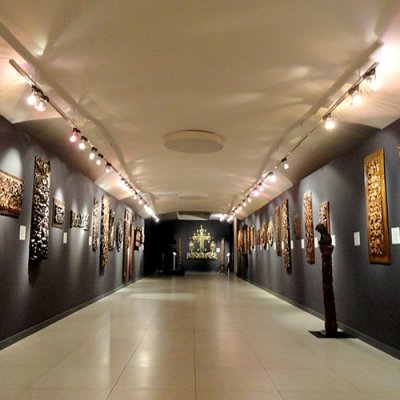
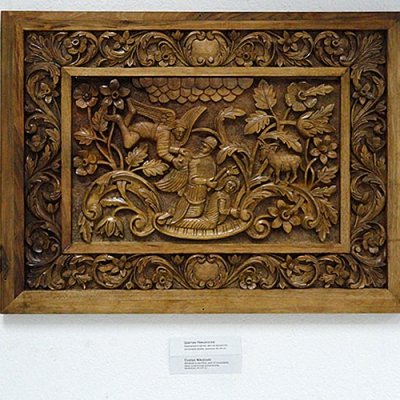
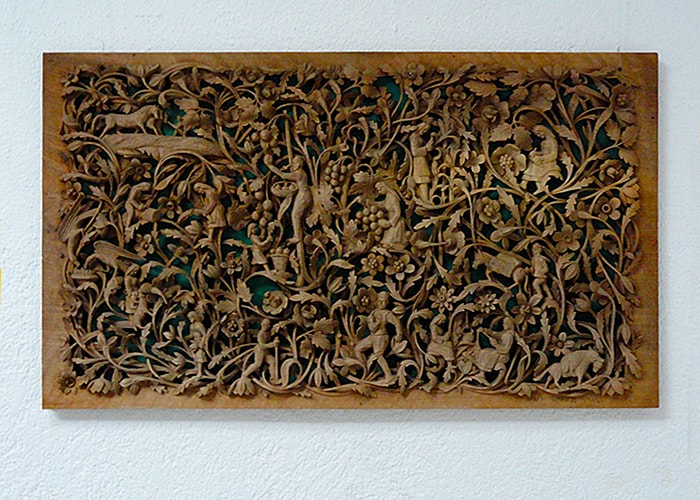
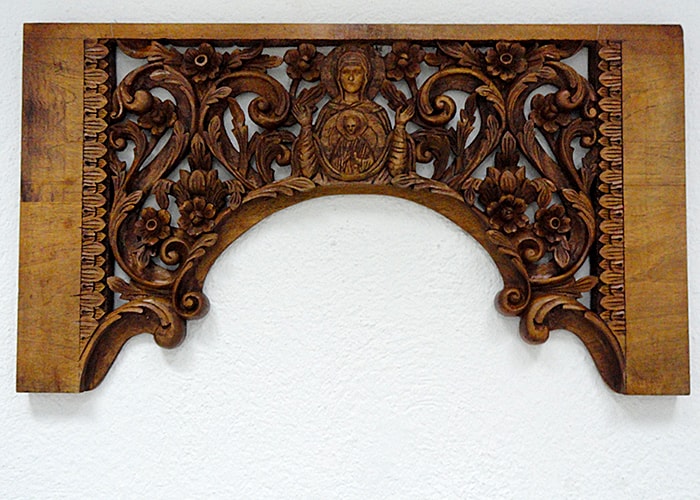
Art of the Macedonian woodcarving-tradition and continuity

23. 05. 2015 – 07. 06. 2015


Within the 47th manifestation “Macedonia Honoring St. Cyril”, in the complex Vittoriano, at the popular Piazza Venezia in Rome, thirty-five Macedonian carvings were presented. Among them were the oldest preserved examples of woodcarving in our country (the pillars of the iconostasis of the church of the Holy Physicians the Lesser in Ohrid from 14th century) and a larger number of exhibits from 20th century, made by the hands of masters of the famous Ohrid carving school.

The exhibition was organized by NI Institute for Protection of Monuments of Culture and Museum-Ohrid which owns part of the presented exhibits, including the oldest ones, while the other are works of 11 authors, modern Ohrid woodcarvers from four different generations who still today cherish the tradition of this extremely subtle artistic craft.

The exhibition was accompanied by a brilliant concert of Duke Bojadziev and friends.

“Art of the Macedonian woodcarving-tradition and continuity” at the Vittoriano museum complex in Rome, Italy

“Clothes from klashna” and “Handwork”

28. 11. 2014


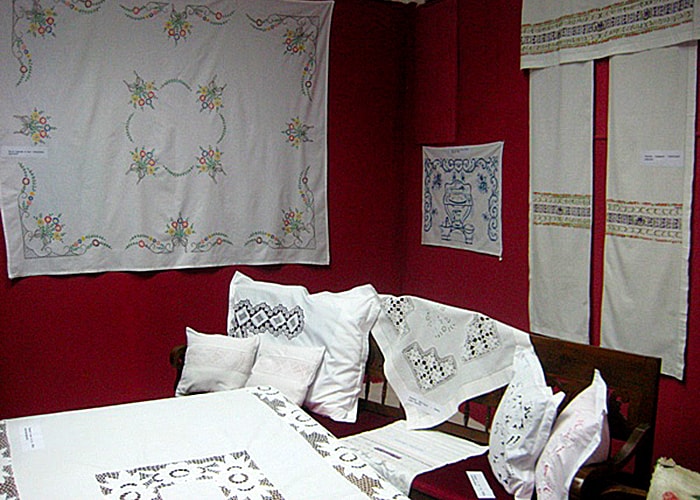
These two exhibitions of ethnological objects that are stored in NI Institute for Protection of Monuments and Museum-Ohrid, on the opening were the cause of much joy, but also nostalgic views, especially among those visitors who still cherish manual labor.

Black and red woolen cord, golden and thread that are hallmarks of the “klasheniks” in one hand, and the use of “file”, “sachan” in knitting with white thread, on the other hand, gave a soul and joy to the space in which they were displayed.

Having in mind the fact that the exhibits are not unknown handwork for the women of Ohrid, more surprising for the visitors was the very idea of ​​this type of exhibition to refresh cultural events in the city.

Although it is said that manual labor is dying, however Ohrid residents remain more or less faithful to the tradition. They appreciate such items, and those citizens who can not keep them at home dowry items from their grandmothers and mothers, have given them to the ethnological department, where they are kept in special conditions.

The oldest exhibit on the exhibitions is “klashenik”, dating from the late 19th century, while the other exhibits are from the beginning of the 20th century. As for the origin of the objects, furniture and handmade items, they are mainly from Ohrid, while the “klasheniks” are mainly from Ohrid-Struga region, but thera are also samples from Debar, Kichevo, Resen, Galichnik.

Exhibitions “Clothes from klashna” and “Handwork” in the House of Robev Family

Golden faces of the Macedonian kings-Macedonians and Celts from Ohrid region

24. 07. 2014 – 16. 11. 2014


Part of the valuable archaeological items found in the region of Ohrid on 24 July will be on display at this State Museum of Germany within the exhibition which will be opened by the end of this or at the beginning of  next month.

The exhibition consisting of 62 valuable artifacts originating from 5th to 3rd centuries b.c. that were found on the territory of our country during archaeological research, confirms the power of the Macedonian aristocracy, as well as contacts between prehistoric Central Celtic world and Mediterranean culture of imperial Macedonia between 6th and 2nd century b.c.

This is really an exceptional opportunity for visitors to learn about one of the most glorious periods of the Macedonian history.

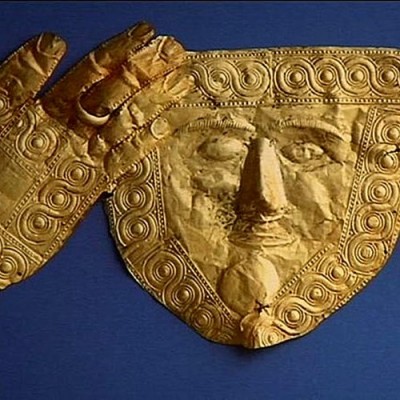
The golden mask and glove, gold jewelry, coins, medallions 25 centuries old, the renown alabaster figure of Isis, vessels of pottery, bracelets, weapons, Celtic helmets and other items vividly tell the story of Macedonia, which is an integral part of the mosaic of the European civilization and culture. The artifacts are evidence of our cultural and historical identity; they represent the material truth about the development of civilization on Macedonian soil.

In Manching we will present three blocks of objects originating mainly from the city of Lychnidos on Ohrid Lake. There is the golden treasure from Trevnik, near Negotino and objects of Celts who gave their lives in defense of the citizens of Lychnidos.

The exhibition is organized by the Archaeological Museum of Macedoniain cooperation with institutions from Ohrid and Negotino, the Coastal University from Slovenia, Loshinj Museum from Croatia and Kelten-Römer-Museum. The project is funded by the European Union.

Exhibition “Golden faces of the Macedonian kings-Macedonians and Celts from Ohrid region” in Kelten-Römer-Museum in Manching, Germany

Sounds of the chisel

09. 09. 2013


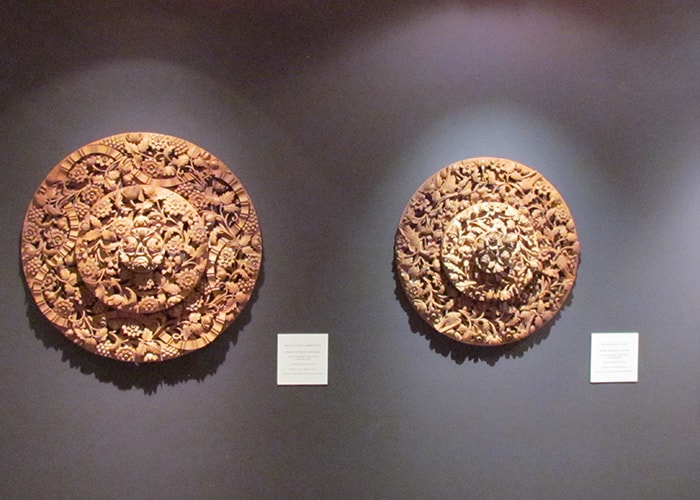
In the exhibition hall of the House of Robev Family in Ohrid, rare specimens of modern Ohrid woodcarvings are exposed in front of the Macedonian and foreign public. The exhibition titled “Sounds of the chisel,” which presented works by 12 artists of differing generations made in various techniques, was organized after lengthy, decade break.

The carving is a craft with a long tradition in Ohrid. Here a carving school existed for decades, and after its closure the youth trained in the studio of EMO Company in Ohrid. In one period, there was a carving studio in the Institute and Museum-Ohrid. Now there are a few individuals that create carvings, two of them having studios right on the street which is considered the most interesting bu its old city architecture and most sacred that leads to the cathedral church of St. Sophia and many other sacral monuments in Ohrid.

The woodcarvings made of Ohrid masters are extremely valuable works of art, which are highly appreciated not only in Macedonia but also beyond. Their works adorn many spiritual temples and institutions.

Exhibition “Sounds of the chisel” contemporary Ohrid woodcarving in the House of Robev Family

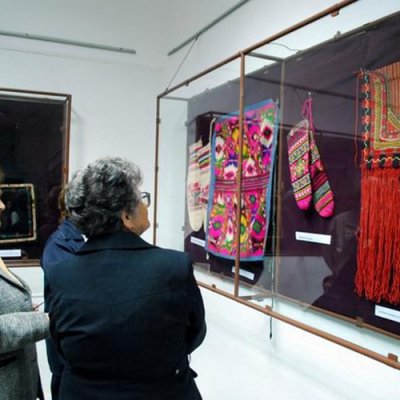
Aprons and Stockings

04. 10. 2013


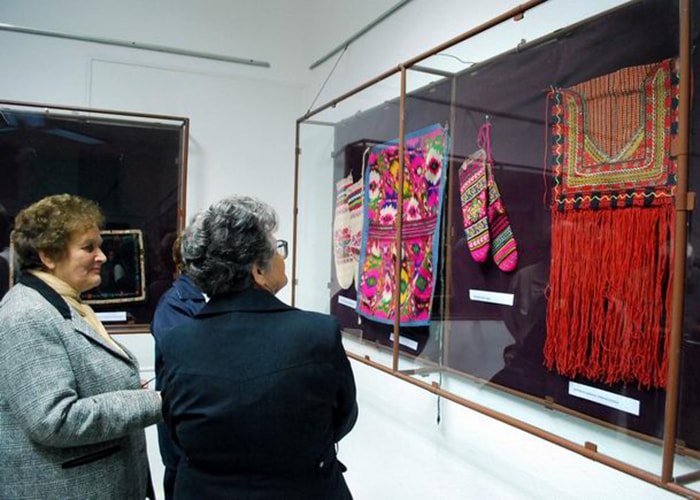
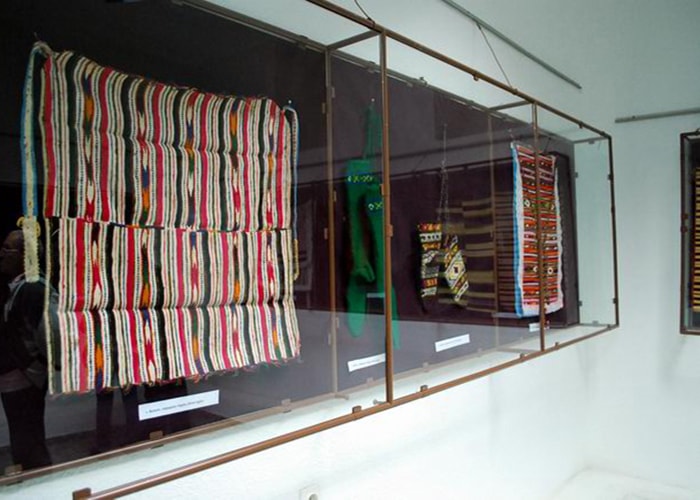
The show was presented another ethnological treasure which has NI Institute and Museum-Ohrid, without which one cannot imagine the full national costume.

The visitors had the unique opportunity to learn about the 15 authentic pairs of socks and aprons from different parts of the country, which speak of enduring artistic creation and testify to the rich tradition and history that possesses this region.

The aprons are rectangular in shape and most of them are shaped in two folds joined horizontally or vertically. Most of them are made of wool, decorated with woven decoration still in the process of weaving and are special handicrafts with striking beauty.

The aprons can be classified into simple ones, intended for everyday use and most decorated ones that are used as part of bridal dresses.

They also depicted the status, and the age of those who wore them. There were also small children’s aprons, aprons for girls, for brides and for adult women. Depending on where they originated, the name of the aprons eas different. Somewhere they were called “bofcha”, “bokcha”, “futa”, “pregacha”, but the purpose of all is the same. They were worn at the waist as safety at work, anbut were also the ornament of folk costume.

Neither folk costume could be complete without wool socks that were worn by both men and women. They show the knitting skill of the Macedonian woman, who knitted socks on five, three or one needle, mainly of wool and rarely with cotton yarn. In terms of coloring, primary colors are red, white and black, with lesser or greater presence of other colors and decoration of geometric and floral motifs. All socks are long to below the knees and richly ornamented from the foot to the top of the male socks and the female ones are the richest decorated from the foot to the ankle, the part most exposed to the eyes, because the other part was covered by a long shirt. The socks were mostly worn in winter days as protection from the cold, but also during holidays, no matter if it was summer or winter.

Exhibition “Aprons and Stockings” in the House of Robev Family

Unimagined beauty-icons from Macedonia

09. 02. 2011 – 11. 05. 2011


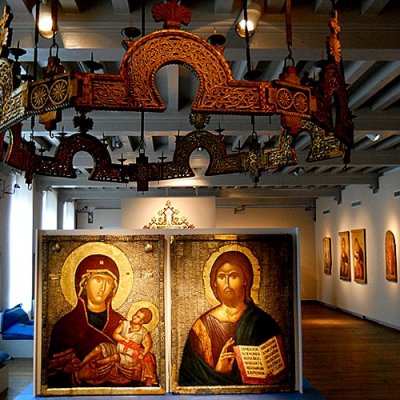
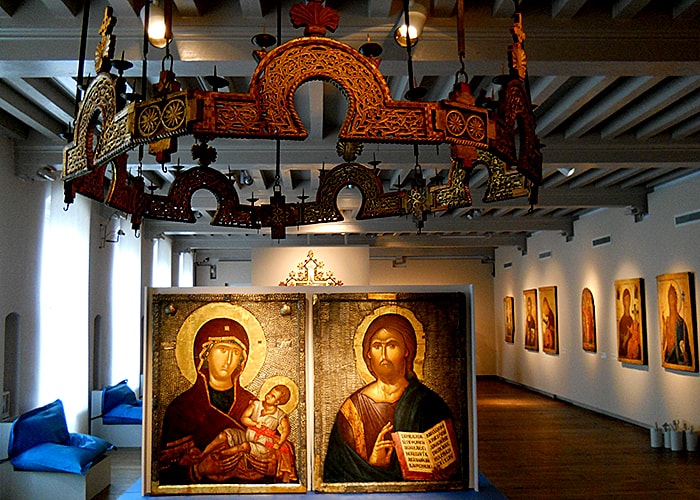
This was the largest exhibition ever presented by the Republic of Macedonia in a foreign museum. The objective was to perform a broader presentation of the culture of our country in a friendly country such as the Netherlands and a way to restore the traditionally good relations, especially in the sphere of culture and tourism. The initiative for this exhibition was launched in 2005 during the visit of a large delegation from the Netherlands to Ohrid and after five years of preparatory activities came to its implementation in 2011. Their exhibits for the exhibition lent more institutions of our country: NI Museum of Macedonia-Skopje, NI Institute and Museum-Ohrid, the Museum of the City of Skopje, NI Institute and Museum-Bitola and NI Stobi. A total of 159 items, including 52 icons, archaeological, ethnological, and other liturgical objects were displayed, of which 29 from the collection of our institution.

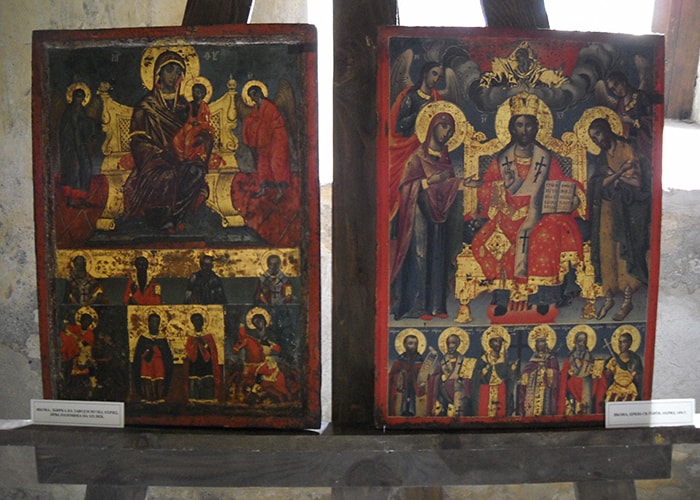
Exhibition “Unimagined beauty-icons from Macedonia” Katarajnekonvent Museum in Utrecht, Netherlands

St. Naum of Ohrid icons in the ico painting of the Diocese of Debar and Kichevo from 18th and 19th centuries

03. 10. 2010 – 08. 10. 2010


The exhibition was organized on the occasion marking the 1100 anniversary of the death of St. Naum by the Macedonian Orthodox Church- the Diocese of Debar and Kichevo and it presented a total of 30 icons, of which 5 from the collection of NI Institute and Museum-Ohrid.

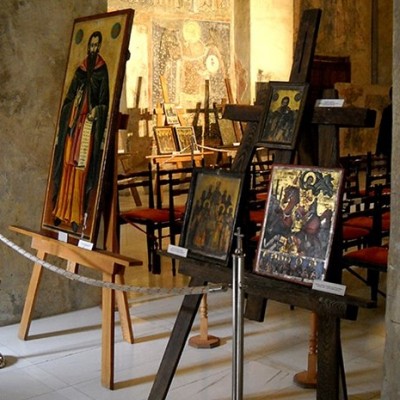
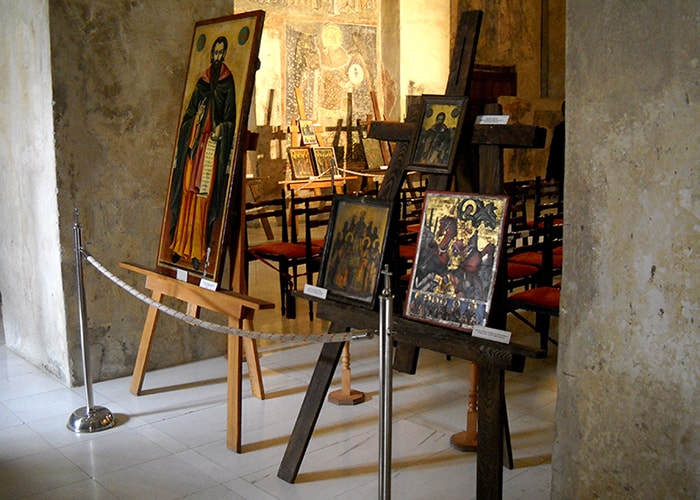
Exhibition “St. Naum of Ohrid icons in the ico painting of the Diocese of Debar and Kichevo from 18th and 19th centuries” in the church St. Sophia in Ohrid

Byzantium 330-1453

25. 10. 2008 – 22. 03. 2009


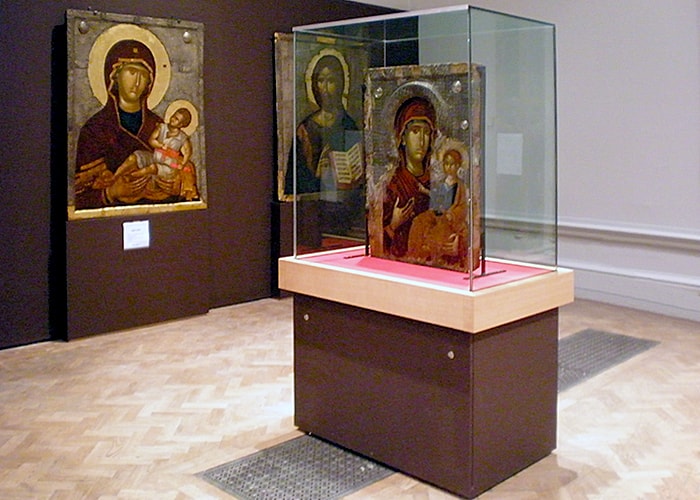
This exhibition was once again staked the splendor of the Byzantine Empire. There were around 323 objects displayed, including icons, original scenes and fragments of wall paintings, micro-mosaics, ivories, enamel, gold and silver. Some of the works had never before been shown to the public. The exhibition presented outstanding works from the treasury of the church of Saint Marc in Venice and rare items from collections across Europe, USA, Russia, Ukraine and Egypt. The exhibition begins with the foundation of Constantinople in 330 AD by the Roman Emperor Constantine the Great and ends with the capture of the city by the Ottoman forces of Sultan Mehmed II in 1453. This was the first major exhibition of Byzantine art in the United Kingdom in the last 50 years.

A total of 136 museums, cultural, scientific, religious and other institutions and private collections from 27 countries around the world were presented with their exhibits at the exhibition, and the Republic of Macedonia was represented by NI Institute and Museum-Ohrid, with eight icons from its collection.

Exhibition “Byzantium 330-1453” at the Royal Academy of Arts in London, United Kingdom