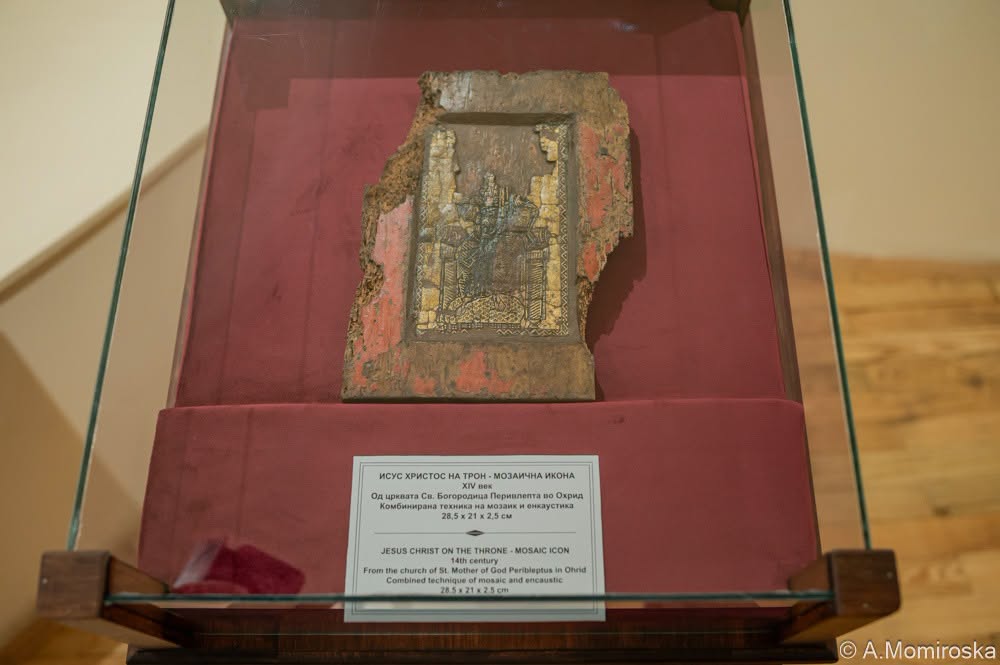
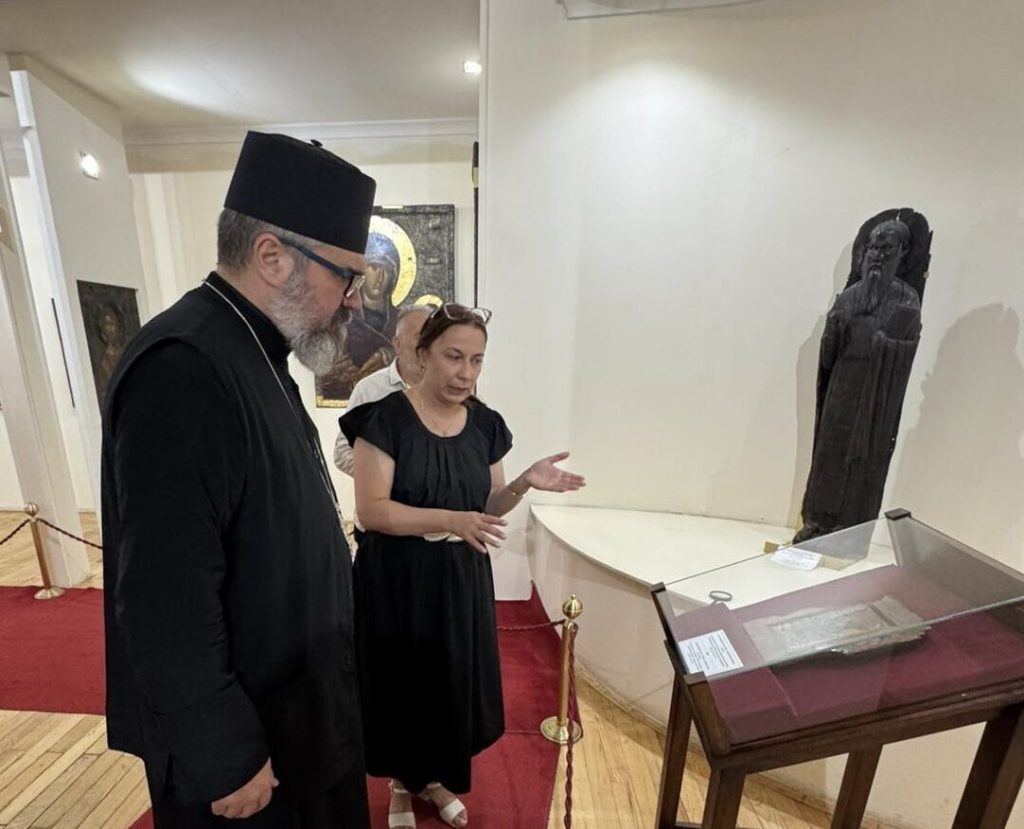
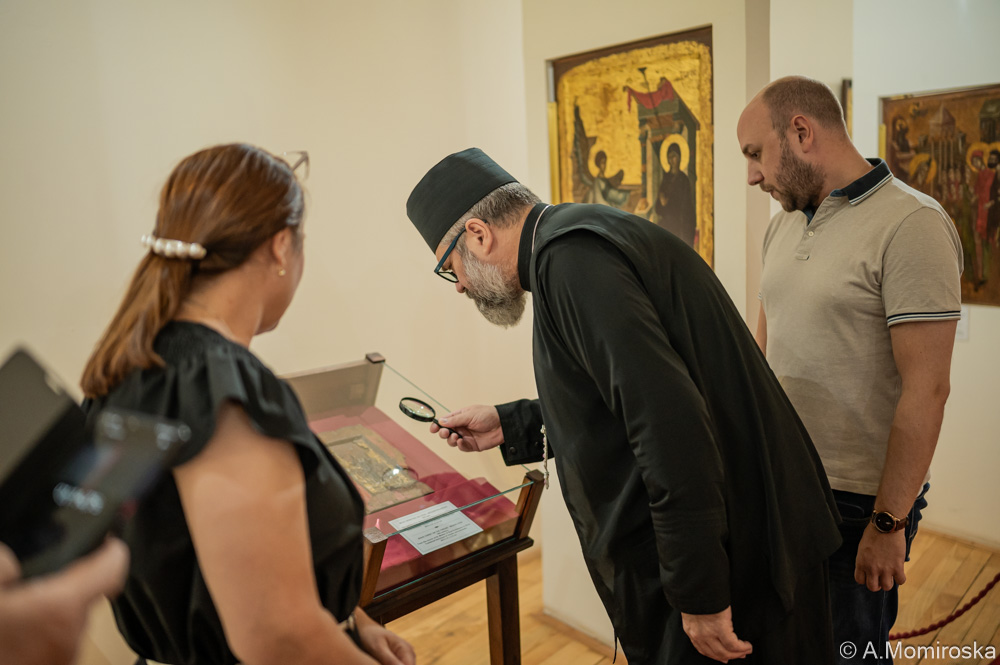
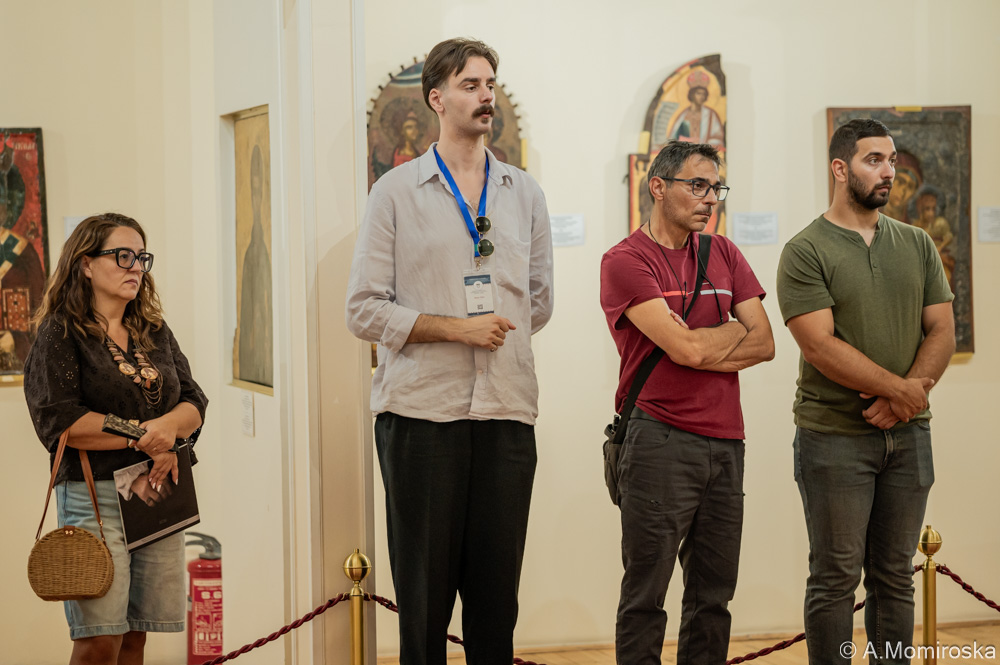
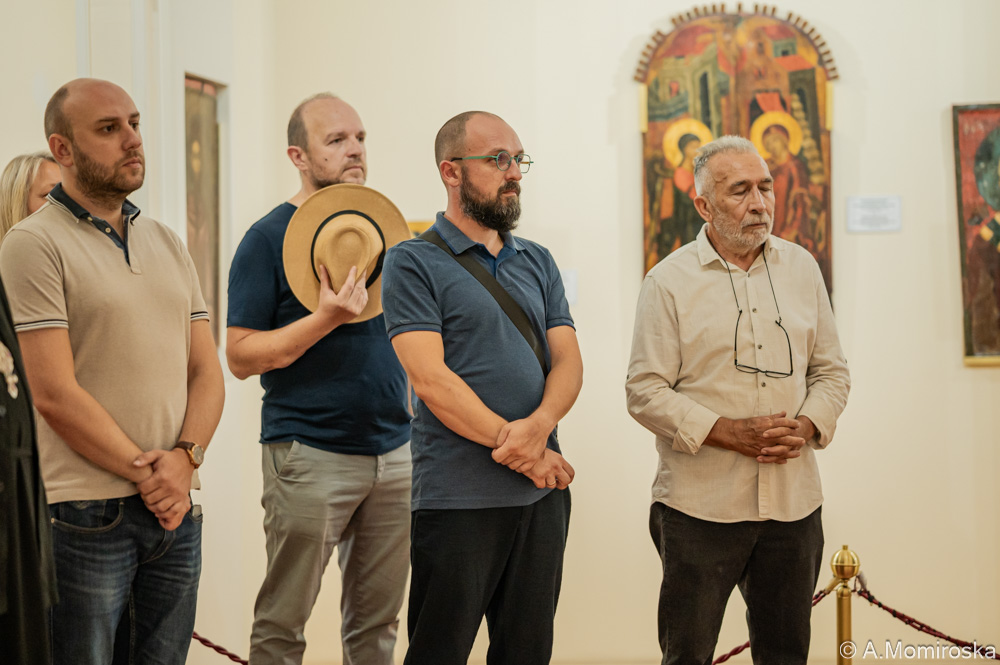
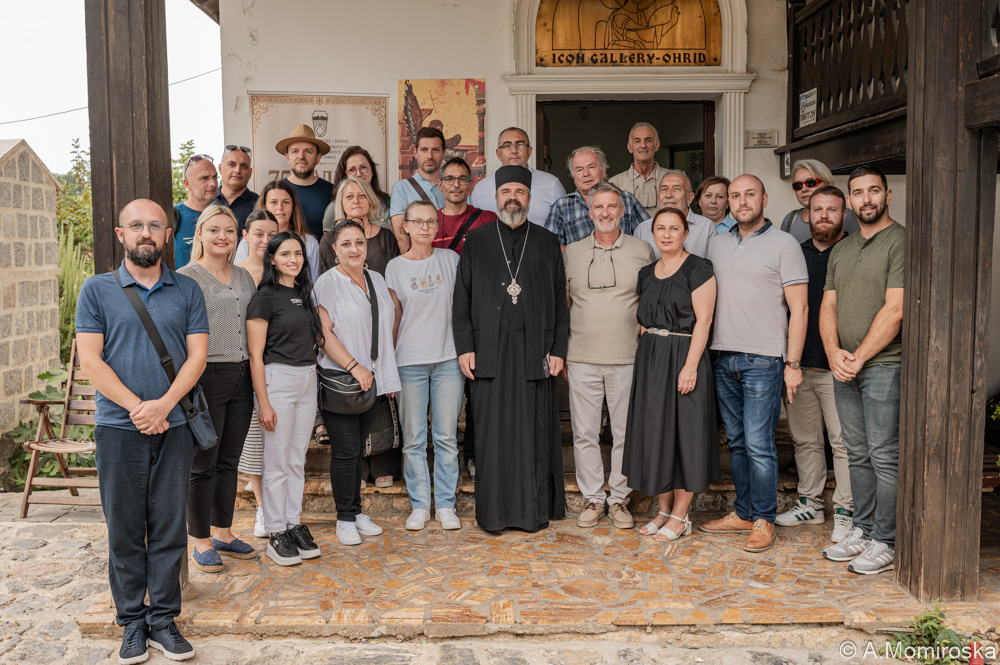
The unique and unique mosaic icon in Macedonia was presented to the Macedonian public for the first time as part of the commemoration of the 75th anniversary of organized museum activities in the city by the NU Institute for the Protection of Cultural Monuments and the Ohrid Museum, and on the occasion of the celebration of the 1110th anniversary of the death of Saint Kliment Ohriski.
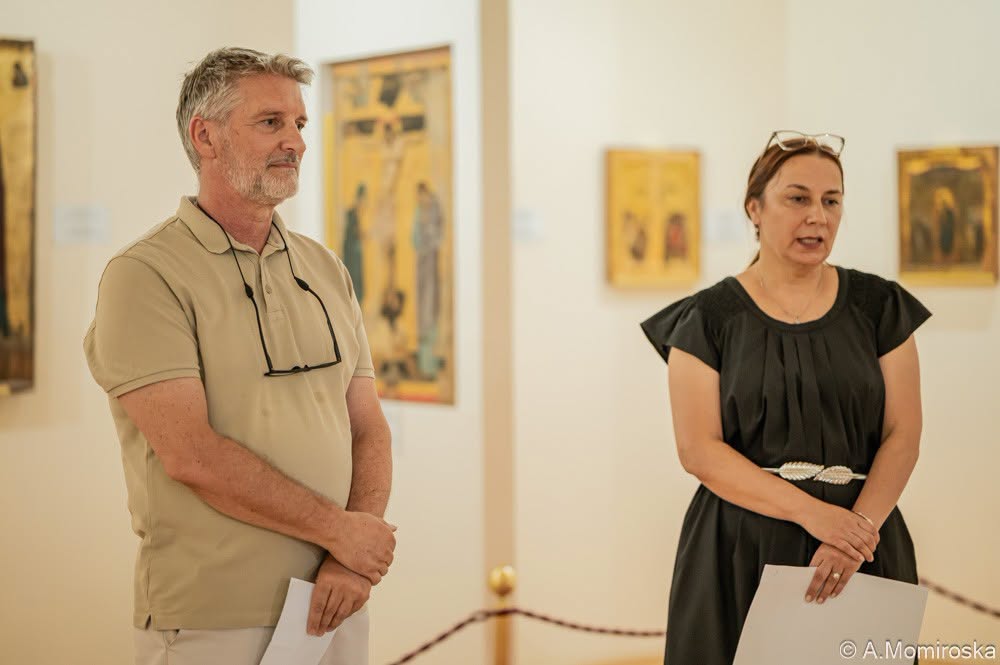
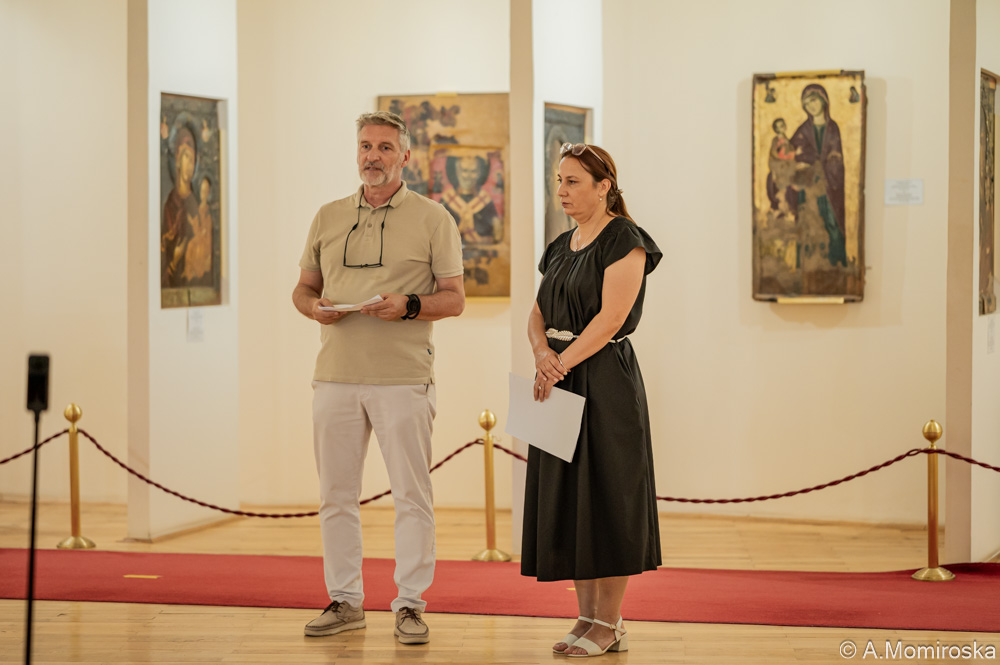
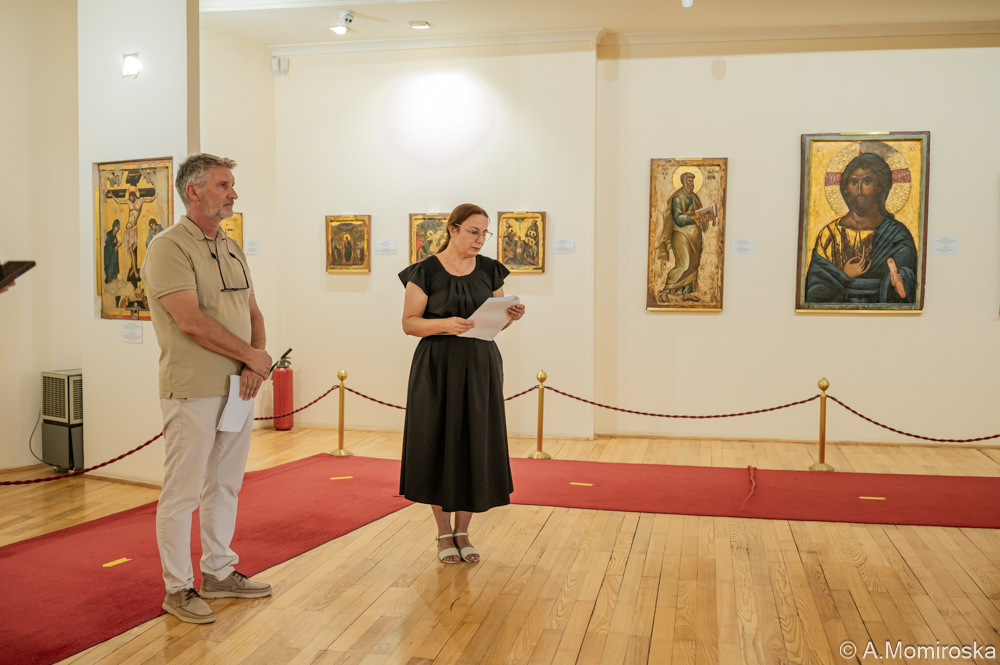
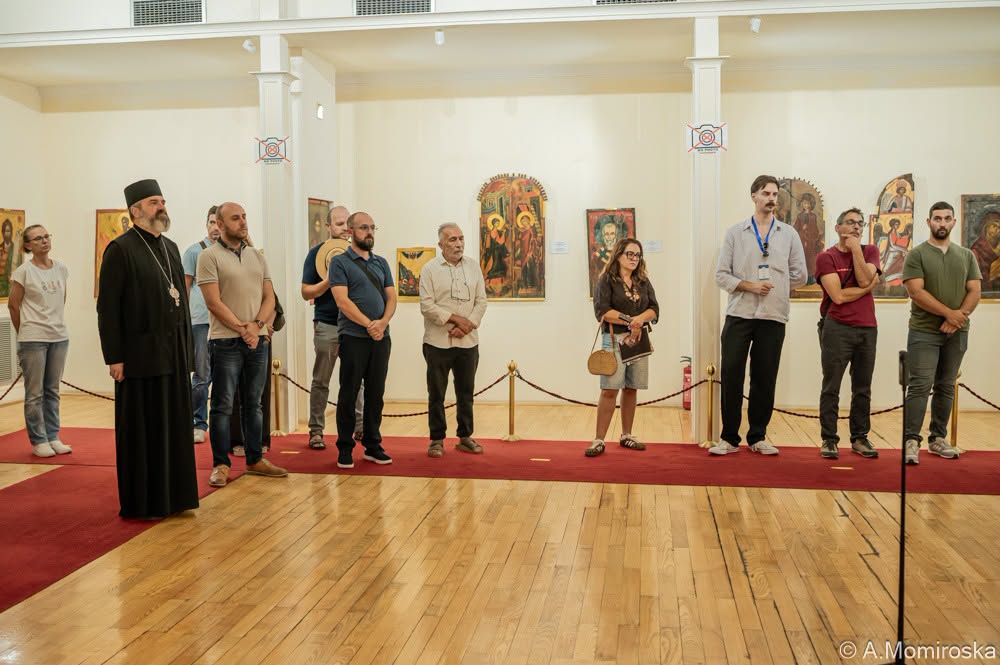
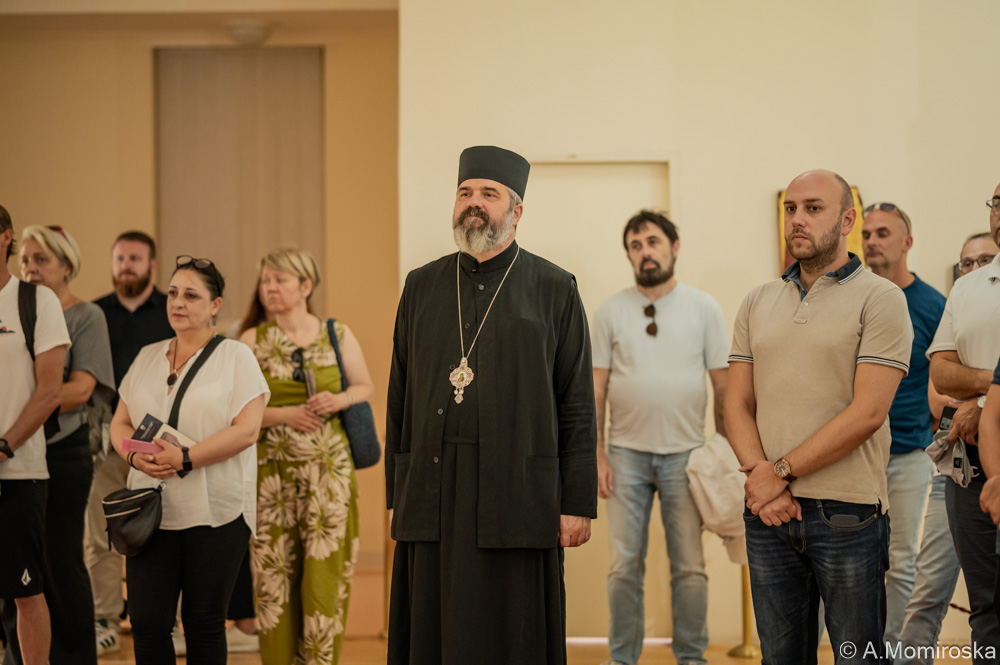
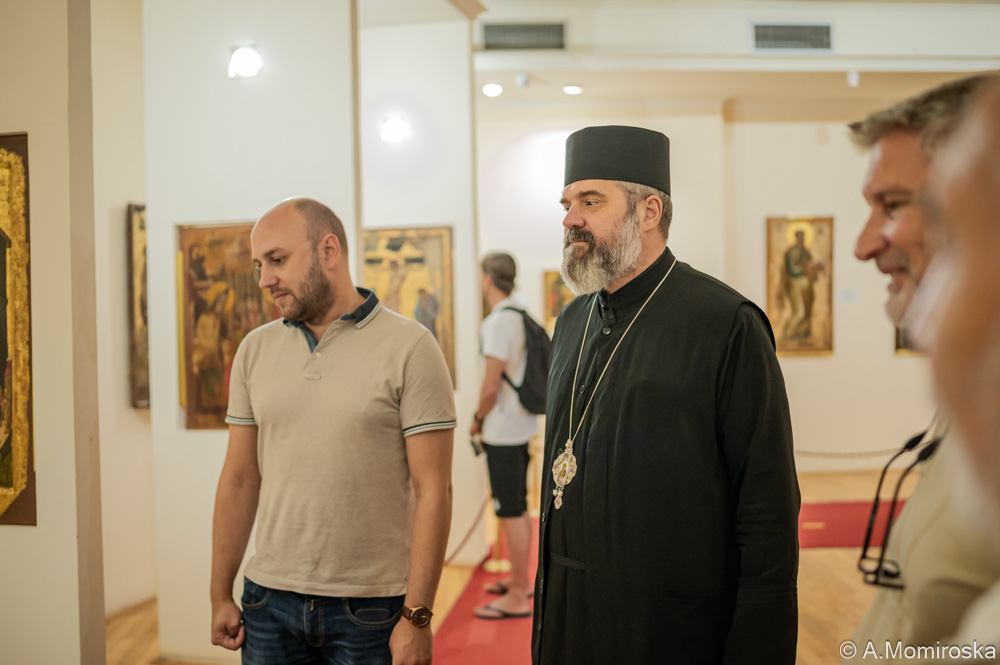
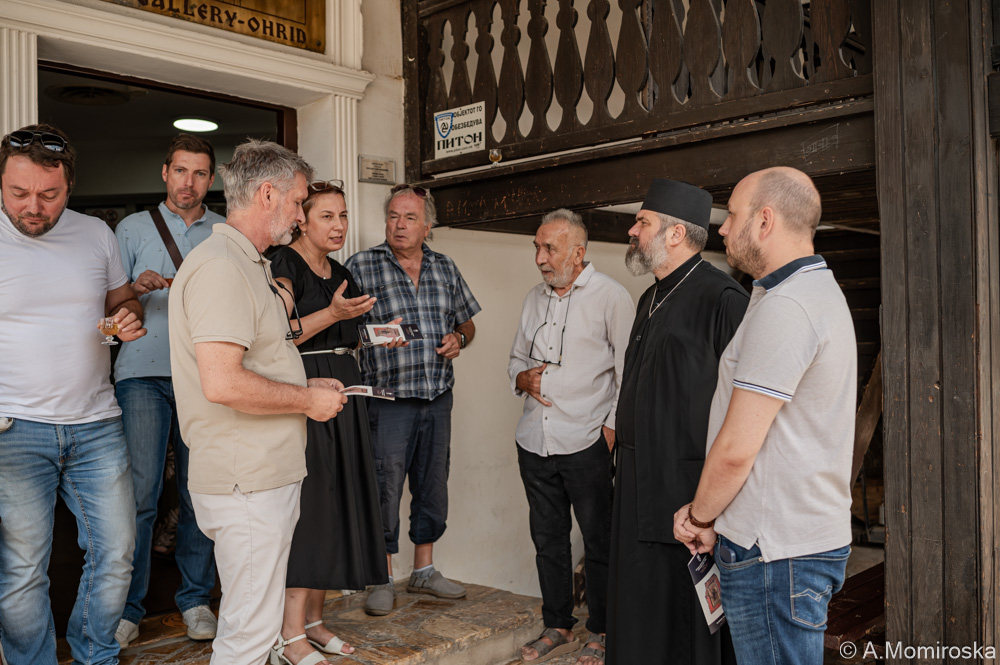
The promotion was opened by the Director, M.Sc. Goran Patčev, with greetings to those present, His Eminence the Metropolitan of Debar-Kičevski, Mr. Georgij, and other representatives of the institution, cultural workers and visitors.
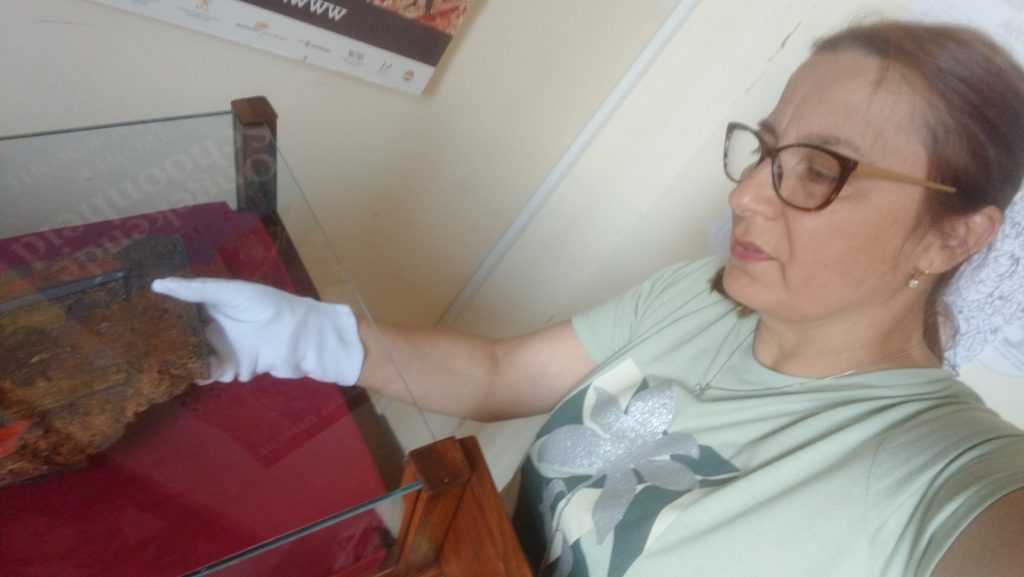
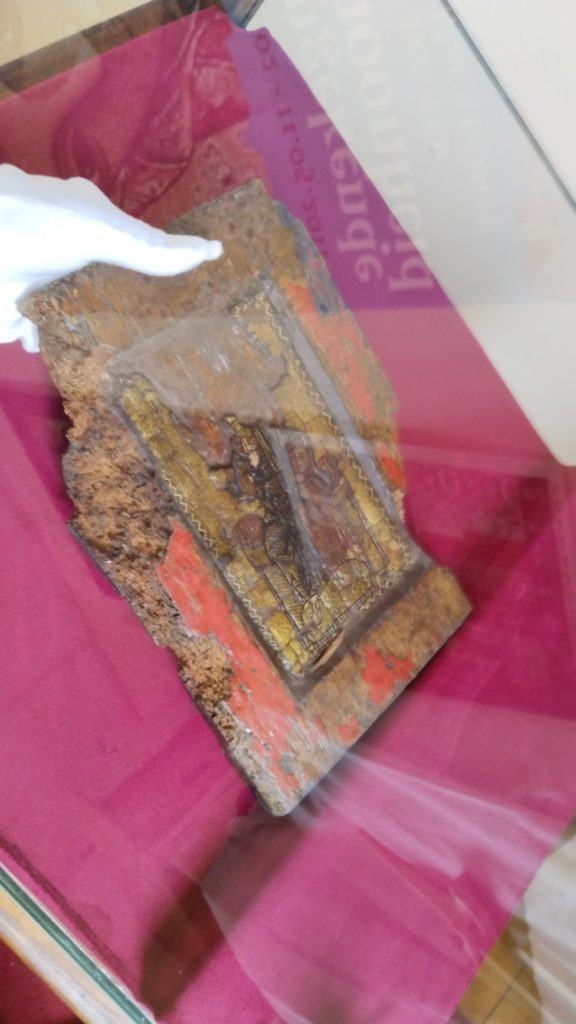
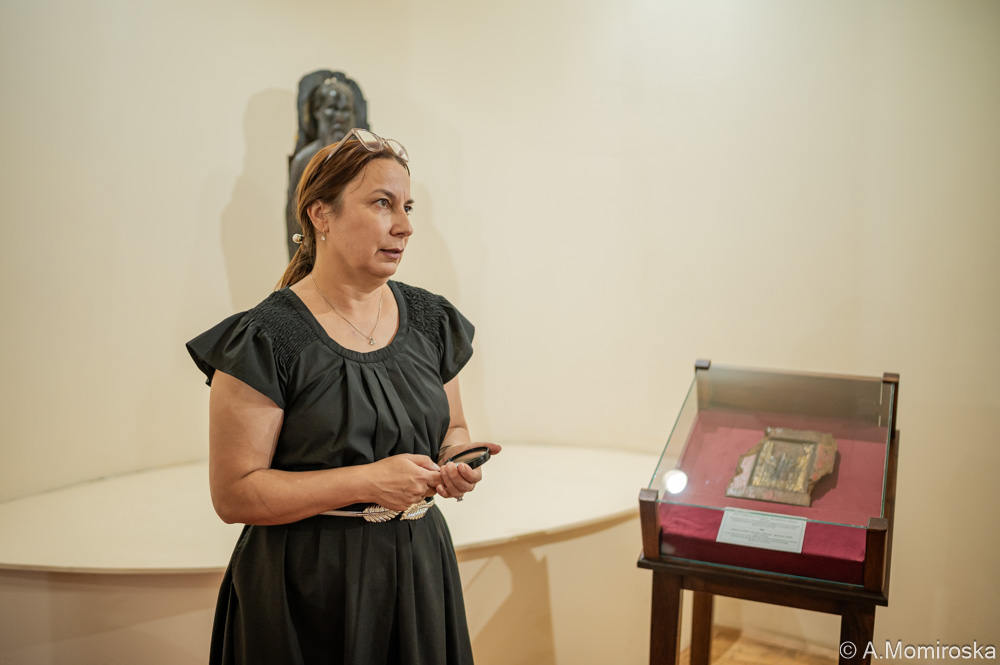
Art historian Katerina Velkoska spoke about the value and meaning of mosaic icons, who pointed out that in 1960, during the recording of icons in the church of St.Bogorodica Perivlepta in Ohrid, this mosaic icon was discovered in the southern chapel of the church next to other icons. At that time, the icon was dated as being from the 14th century, but it may be older.
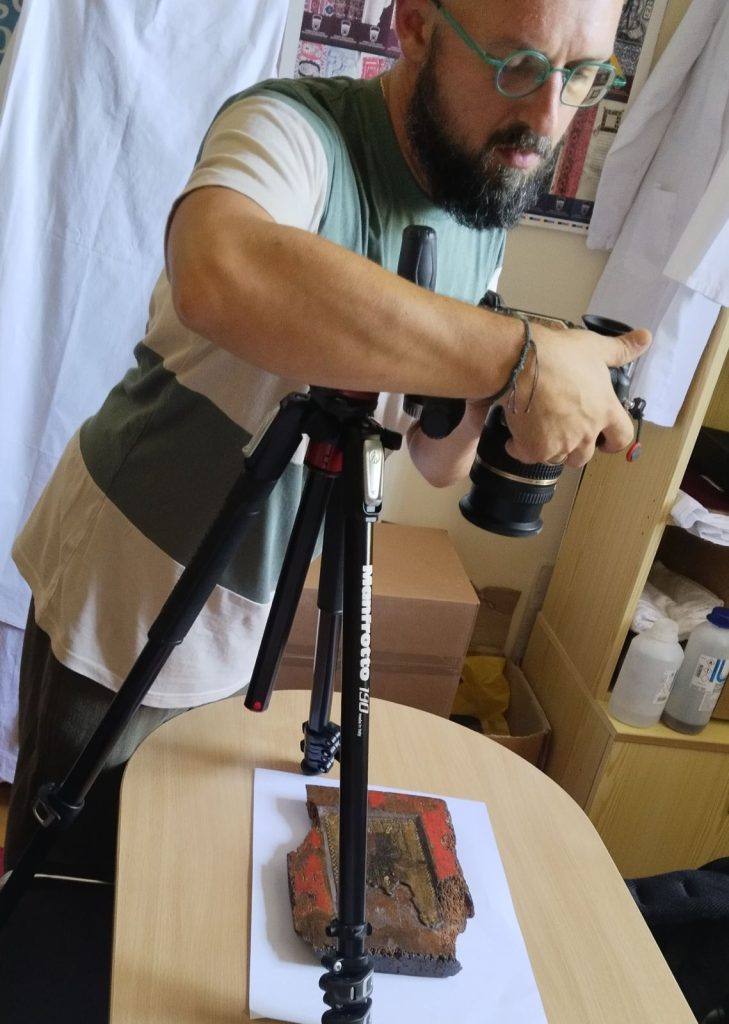
On the icon with dimensions 28.5x21x2.5, Jesus Christ is represented sitting on the throne.
The mosaic technique represents the most complex and expensive medium of fine art in the Byzantine period, so small mosaic icons belong to a certain class of people and are a product of court art. This icon here in Ohrid was most likely brought as a gift from Constantinople or Thessaloniki.
Mosaic icons are among the rarest forms of Byzantine iconography. Today, significant examples are preserved in several of the world’s largest museum collections, in the Louvre in Paris, the Metropolitan Museum in New York, the Bode Museum in Berlin and the Byzantine and Christian Museum in Athens.
In Ohrid, a city that for centuries represented one of the most important centers of Orthodox spirituality and Byzantine culture in the Balkans, this rare mosaic icon represents yet another precious proof of its place in the history of European and Byzantine cultural heritage.
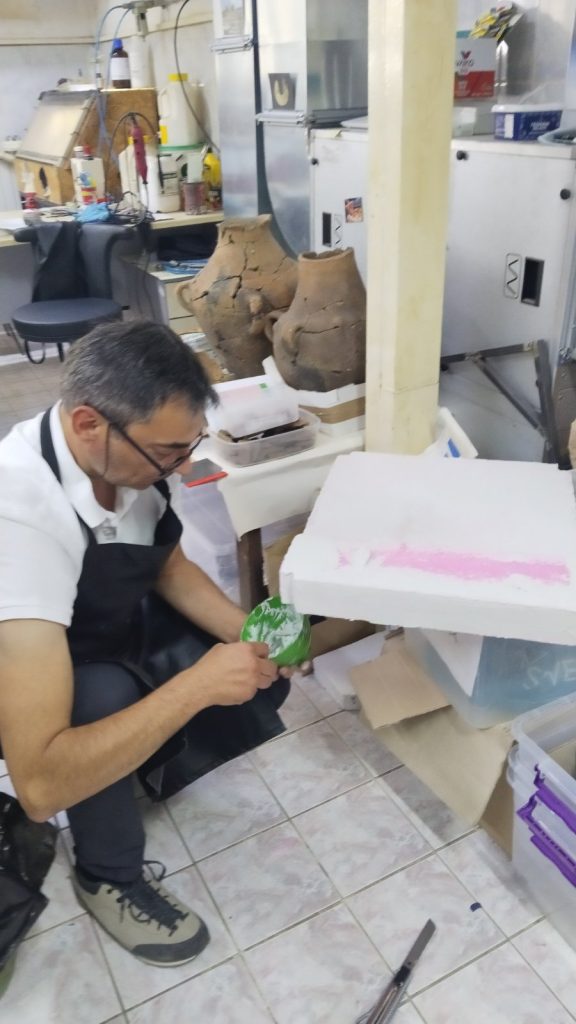
This project is part of the annual program for the work of institutions financially supported by the Ministry of Culture and Tourism. The project “Current maintenance of the collection of icons and other liturgical objects” was realized by the department curator, art historian Katerina Velkoska.