Inside garden

30. 06. 2017 – 06. 07. 2017


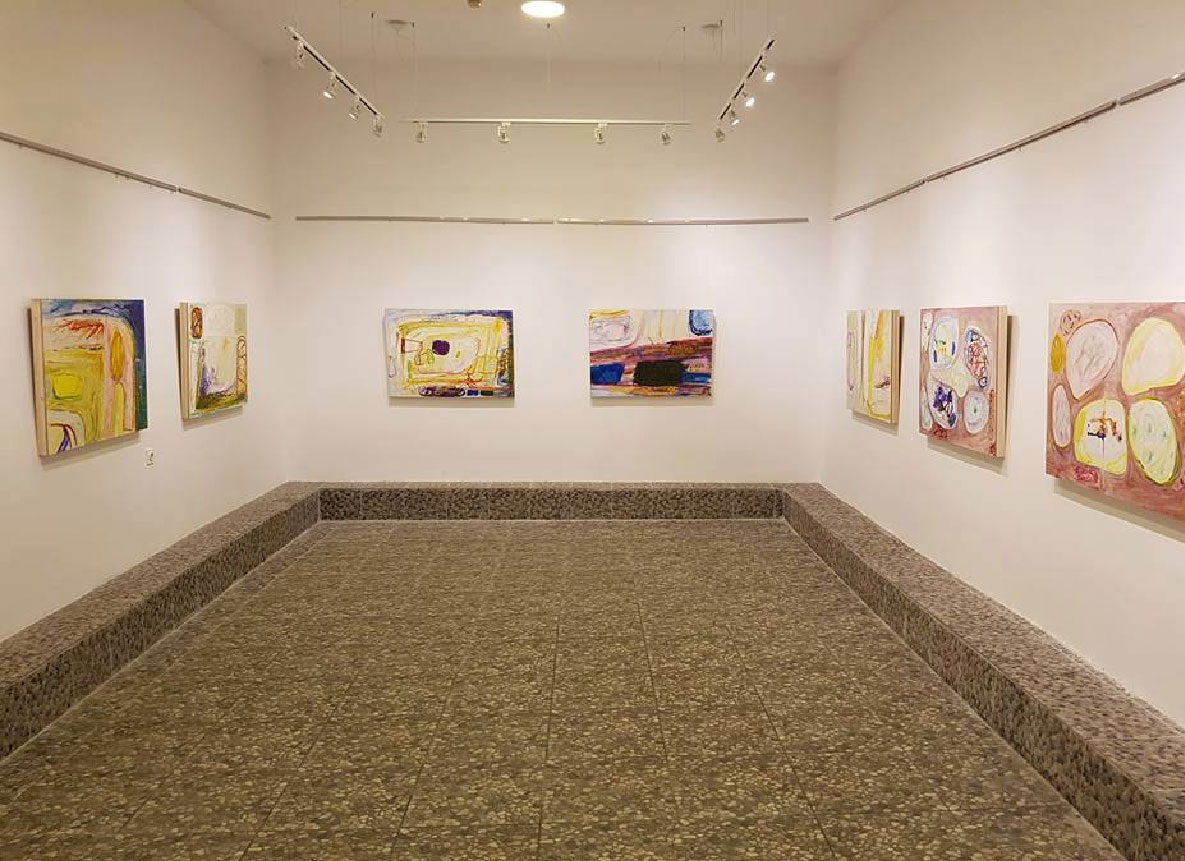
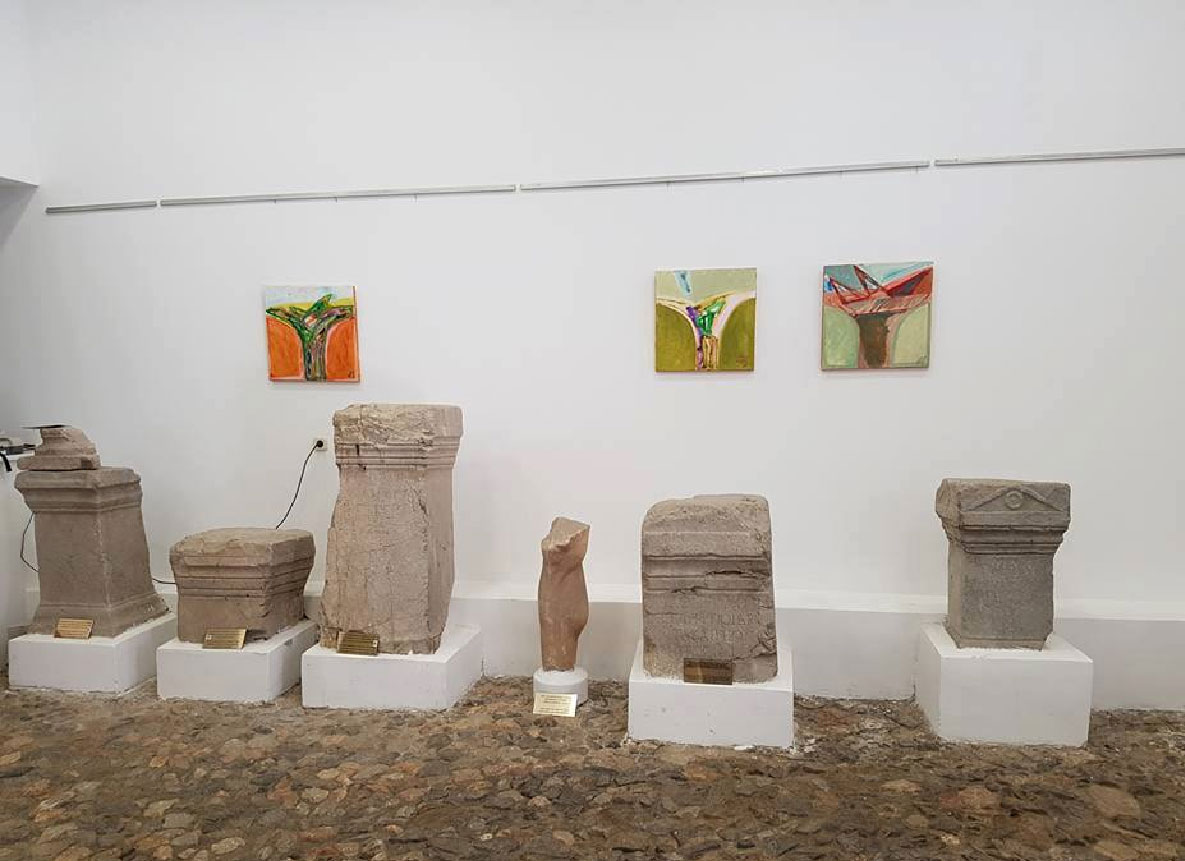
The works of the Romanian painter Emilia Persu, after a pause of six years, are once again exhibited in Ohrid. On June 30, 2017, in the Robevci Art Gallery, an exhibition of this painter, who is part of the avant-garde artist generation from Romania, titled “Interior Garden” was opened. The exhibition presented the latest cycle of author’s works, made on canvas in combined technique.

Otherwise Emilia Persu is an artist and president of the graphic department at the Association of Artists of Romania.

She was born on February 21, 1963 in Bucharest, Romania, and graduated from the Faculty of Fine Arts, department of painting, also in Bucharest.

For the first time in front of the Ohrid audience, her paintings were presented in 2011 at an exhibition titled “Postmodern Levant”. The art lovers in many European countries had an opportunity to see her works of art and she has also participated in a number of camps, festivals and symposiums in Iraq, India, Morocco in St. Petersburg in Russia.

Exhibition “Inside Garden” of the Romanian artist Emilia Persu

Polish School of Poster

 14. 10. 2016


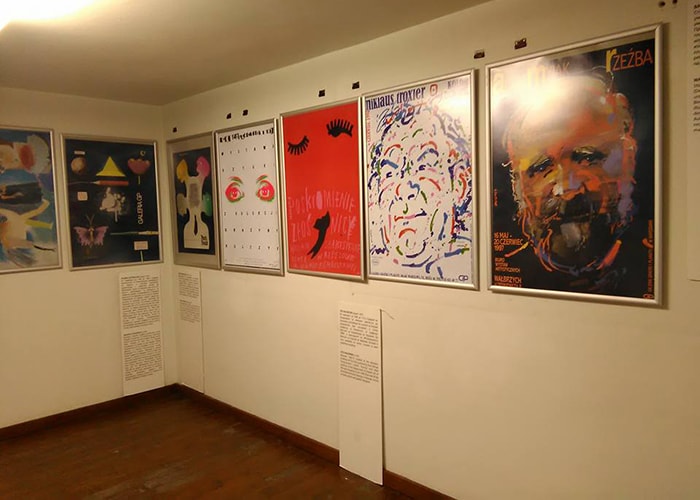
The rich collection of posters that Polish Embassy in Macedonia has brought in the country is available for Ohrid artistic audience in the exhibition at the Memorial House of Hristo Uzunov. Works by the most prominent Polish poster artists of the so-called golden years from 1950 to the present are on display. For decades, no public event, film, festival, concert, theater play is presented without a poster. With the invention of threecolored lithographic process in 1880, by French graphic artist Jules Cheret, the poster at the end of the 19th century in Europe becomes the art of the great urban landscape. This new means of communication especially was developed with the new graphics solutions and great innovation of the first masters of the poster, Henri de Toulouse Lautrec, Leonetto Capielo, Alphonse Mucha, Eugen Graset.

The Polish poster is permitted form of artistic expression and owing to Polish graphic artists Poland became world famous for the art of the poster. Polish poster reaches a level of national art thanks to the extremely talented graphic artists as Tomashevski, Lenica, Majewski, Mlodozhenjec, Starovjejski, Shvjezhi and many others.

In Warsaw in 1968 was opened the first museum of the poster in the world, the Museum in Wilanow as a part of the National Museum in Warsaw whose collection has more than 60.000 works and is also one of the largest collections of posters in the world. This exhibition is realized through the project “Museum Link” of of the Museum of the City of Skopje, in cooperation with 18 other museums, including NI Institute and Museum-Ohrid.

The Polish school of poster is not only the tip of Polish creativity and cultural life after the Second World War, but also serious representative in the European cultural flows. The exhibition was presented in galleries and museums in several cities around our country.

Polish School of Poster in Memorial House of Hristo Uzunov

Golden faces of the Macedonian kings-Macedonians and Celts from Ohrid region

24. 07. 2014 – 16. 11. 2014


Part of the valuable archaeological items found in the region of Ohrid on 24 July will be on display at this State Museum of Germany within the exhibition which will be opened by the end of this or at the beginning of  next month.

The exhibition consisting of 62 valuable artifacts originating from 5th to 3rd centuries b.c. that were found on the territory of our country during archaeological research, confirms the power of the Macedonian aristocracy, as well as contacts between prehistoric Central Celtic world and Mediterranean culture of imperial Macedonia between 6th and 2nd century b.c.

This is really an exceptional opportunity for visitors to learn about one of the most glorious periods of the Macedonian history.

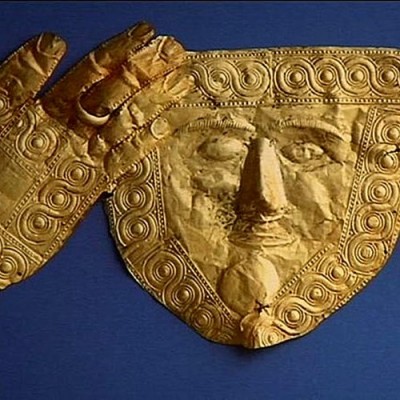
The golden mask and glove, gold jewelry, coins, medallions 25 centuries old, the renown alabaster figure of Isis, vessels of pottery, bracelets, weapons, Celtic helmets and other items vividly tell the story of Macedonia, which is an integral part of the mosaic of the European civilization and culture. The artifacts are evidence of our cultural and historical identity; they represent the material truth about the development of civilization on Macedonian soil.

In Manching we will present three blocks of objects originating mainly from the city of Lychnidos on Ohrid Lake. There is the golden treasure from Trevnik, near Negotino and objects of Celts who gave their lives in defense of the citizens of Lychnidos.

The exhibition is organized by the Archaeological Museum of Macedoniain cooperation with institutions from Ohrid and Negotino, the Coastal University from Slovenia, Loshinj Museum from Croatia and Kelten-Römer-Museum. The project is funded by the European Union.

Exhibition “Golden faces of the Macedonian kings-Macedonians and Celts from Ohrid region” in Kelten-Römer-Museum in Manching, Germany

Sounds of the chisel

09. 09. 2013


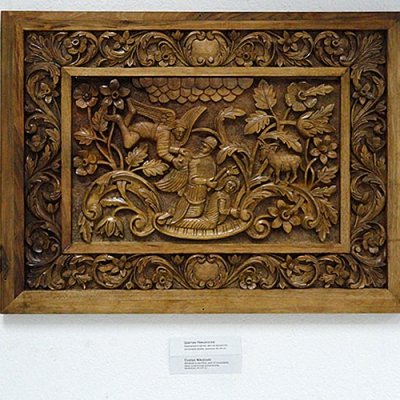
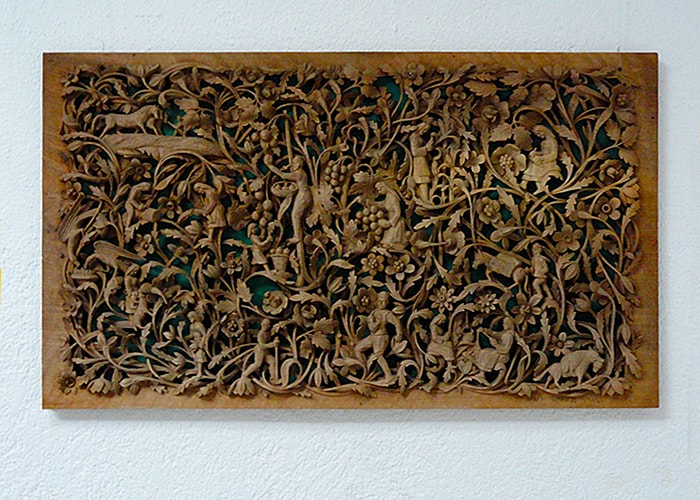
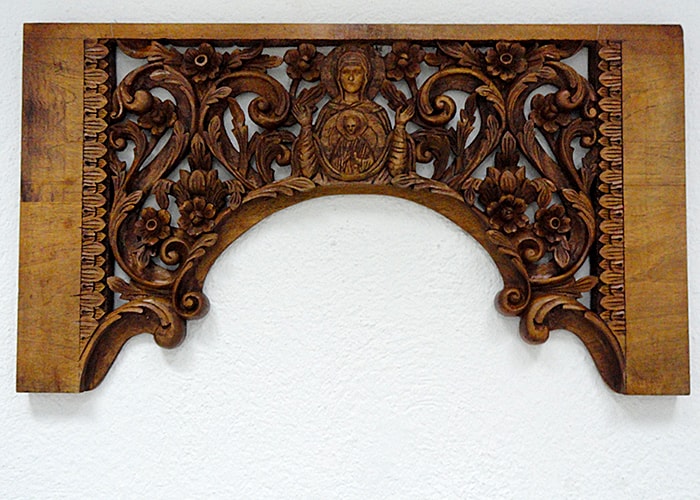
In the exhibition hall of the House of Robev Family in Ohrid, rare specimens of modern Ohrid woodcarvings are exposed in front of the Macedonian and foreign public. The exhibition titled “Sounds of the chisel,” which presented works by 12 artists of differing generations made in various techniques, was organized after lengthy, decade break.

The carving is a craft with a long tradition in Ohrid. Here a carving school existed for decades, and after its closure the youth trained in the studio of EMO Company in Ohrid. In one period, there was a carving studio in the Institute and Museum-Ohrid. Now there are a few individuals that create carvings, two of them having studios right on the street which is considered the most interesting bu its old city architecture and most sacred that leads to the cathedral church of St. Sophia and many other sacral monuments in Ohrid.

The woodcarvings made of Ohrid masters are extremely valuable works of art, which are highly appreciated not only in Macedonia but also beyond. Their works adorn many spiritual temples and institutions.

Exhibition “Sounds of the chisel” contemporary Ohrid woodcarving in the House of Robev Family

Aprons and Stockings

04. 10. 2013


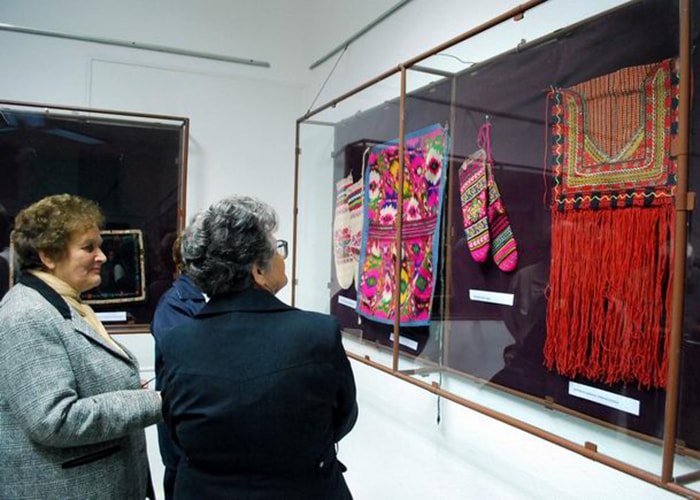
The show was presented another ethnological treasure which has NI Institute and Museum-Ohrid, without which one cannot imagine the full national costume.

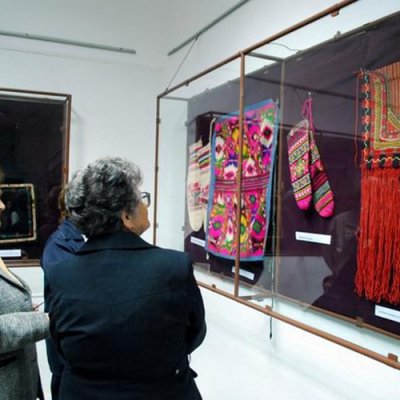
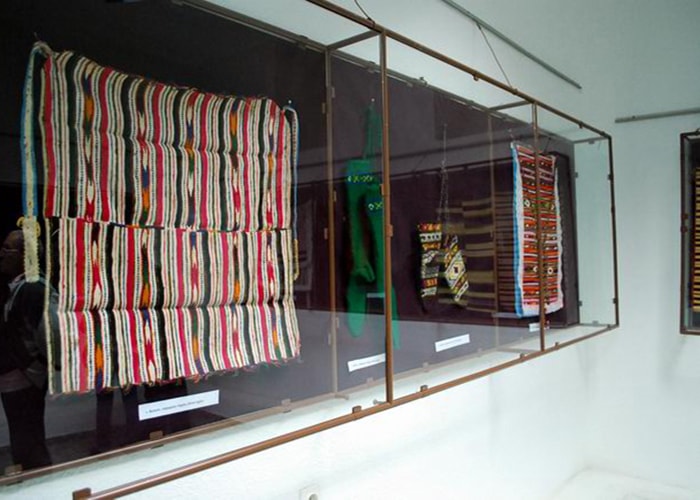
The visitors had the unique opportunity to learn about the 15 authentic pairs of socks and aprons from different parts of the country, which speak of enduring artistic creation and testify to the rich tradition and history that possesses this region.

The aprons are rectangular in shape and most of them are shaped in two folds joined horizontally or vertically. Most of them are made of wool, decorated with woven decoration still in the process of weaving and are special handicrafts with striking beauty.

The aprons can be classified into simple ones, intended for everyday use and most decorated ones that are used as part of bridal dresses.

They also depicted the status, and the age of those who wore them. There were also small children’s aprons, aprons for girls, for brides and for adult women. Depending on where they originated, the name of the aprons eas different. Somewhere they were called “bofcha”, “bokcha”, “futa”, “pregacha”, but the purpose of all is the same. They were worn at the waist as safety at work, anbut were also the ornament of folk costume.

Neither folk costume could be complete without wool socks that were worn by both men and women. They show the knitting skill of the Macedonian woman, who knitted socks on five, three or one needle, mainly of wool and rarely with cotton yarn. In terms of coloring, primary colors are red, white and black, with lesser or greater presence of other colors and decoration of geometric and floral motifs. All socks are long to below the knees and richly ornamented from the foot to the top of the male socks and the female ones are the richest decorated from the foot to the ankle, the part most exposed to the eyes, because the other part was covered by a long shirt. The socks were mostly worn in winter days as protection from the cold, but also during holidays, no matter if it was summer or winter.

Exhibition “Aprons and Stockings” in the House of Robev Family