Introduction
Mediterranean archaeology and imperialism are closely related. The ancient world itself was shaped by empires to a large degree, in particular from the period of around 500 BCE onwards. Our study of that Mediterranean world, moreover, was (and still is) formed by a variety of modern empires that located their beginnings in that Mediterranean past. The Roman Empire and its study probably constitute the most illustrative example hereof. As a result, often a ‘false sense of intimacy’ is created between the Mediterranean past and the imperial present. The Roman Empire, for instance, was often seen as good in the sense of being a mission civilicatrice (a colonial perspective) in the past, while it is nowadays, from a postcolonial perspective, not infrequently presented as a genocidal, imperialist slave society that annihilated local cultures.
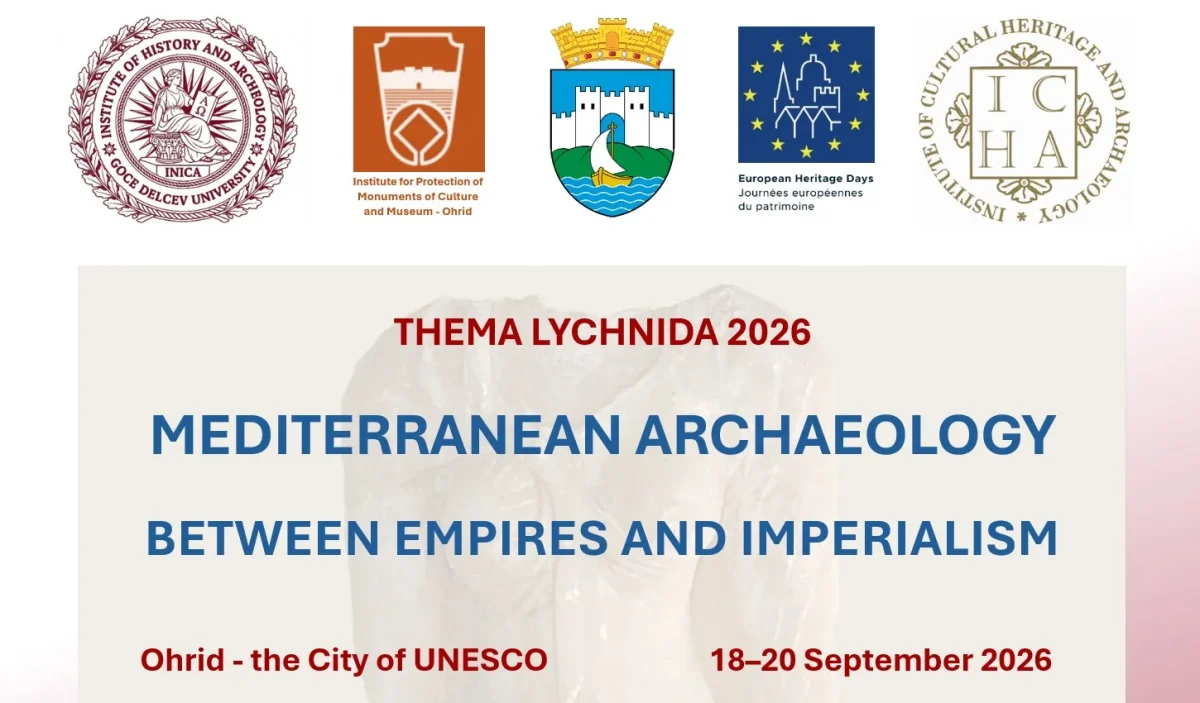
The Aim of the THEMA Lychnida 2026
This meeting builds upon the successful inaugural event of the Symposium on Theoretical Mediterranean Archaeology – LYCHNIDA in 2025, which gathered over 60 theorists of archaeology and archaeological and museum professionals from 25 countries – from USA to Syria. The first symposium brought together fundamental analyses, engaging debates and methodological rigor in addressing contemporary Mediterranean and global challenges, reinvigorating archaeology as scientific discipline, fostering cultural understanding, and safeguarding humanity’s collective heritage.
The aim of this year’s meeting of the THEMA Lychnida is to critically analyze the notion of imperialism as a lens to understanding the Mediterranean past and heritage as well as our study of them in the present. Questions central to the debate include: Was their imperialism(s) the same as ours? Can or should we replace the concept of imperialism with notions like connectivity, network and globalization? To what extent is this ‘false sense of intimacy’ obstructing our scholarly interpretations? Should ideologically motivated views of the ancient empires (“good Romans” versus “bad Romans”) be allowed to play a role in the formulation of a research agenda for the field? How have different scholarly traditions from different countries dealt with this dilemma? How do you deal with the close relation between Mediterranean archaeology and imperialism in your own (academic and museum or heritage) work?
We look forward to welcoming scholars and students of archaeology and related fields to continue this important dialogue in Ohrid – the eternal “City of Light”.
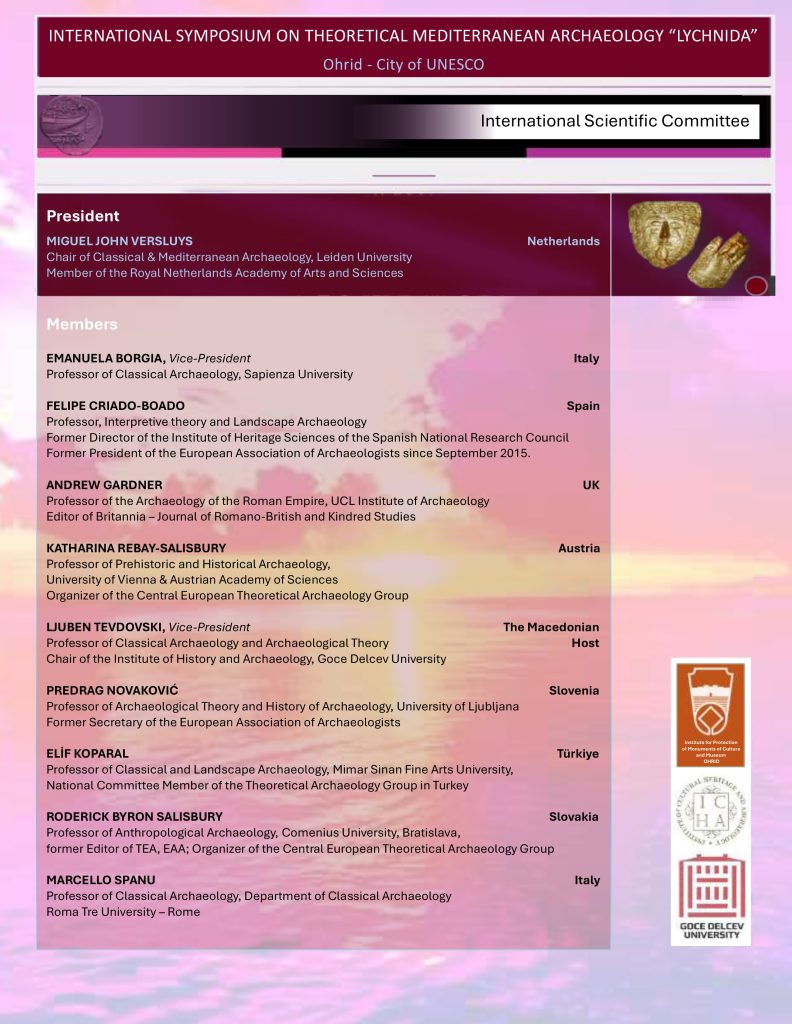
President of the International Scientific Board
Prof. Dr. Miguel John Versluys
Vice President of the International Scientific Board
Vice President of the International Scientific Board and Director of THEMA Lychnida